

In the world of high-precision measurement, we often focus on physical quantities and technical standards while overlooking that the human standards within our institutions are just as critical to our success. PTB International Cooperation recently organized a virtual information and exchange event for national metrology institutes (NMIs) worldwide that focused on ISO 53800:2024, which are guidelines for the promotion of gender equality and women’s empowerment. Around 100 participants from 35 different NMIs from Asia, Africa and Latin America took part.
With so many gender-related frameworks available, you might wonder: why this one? As a quality infrastructure (QI) institution and with its mandate to implement international cooperation projects, PTB is a natural advocate for ISO standards, guidelines and processes. Beyond that, we think that the ISO 53800 guidelines are worth being promoted because they are practical and accessible. Unlike high-level policy documents that can feel abstract, these guidelines target the organizational level and are applicable across all sectors. The ISO 53800 voluntary guidelines provide principles, action points and a methodology that are within the immediate reach of NMI management and staff. Whether an NMI is large or small, whether it is located in a developed or developing economy, ISO 53800 offers hands-on ideas that can be implemented right now. By implementing these guidelines, NMIs can ensure they are attracting and retaining the best talents while fostering an environment where staff members of all genders can contribute to their full potential.
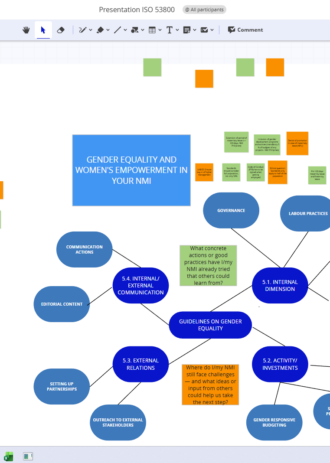
Knowledge is valuable, but only experience is transformative. The PTB information and exchange event on ISO 53800 wasn’t just a lecture; it was a forum for NMIs across different world regions to share their realities— challenges as well as good practices. Some of the issues raised by participants are common to all kinds of organizations—for example, how to enable female staff to pursue a career even during life phases such as starting a family or caring for relatives. Other issues raised are rather specific to the working environment in NMIs, such as how to ensure that women are not discouraged from entering physically demanding workspaces or male-dominated laboratories. Hearing how peers in another country tackled a specific issue inspired others and contributed to networking among NMI staff members interested in promoting more gender equality and women’s empowerment. Before the event, we had identified two examples of NMIs in Rwanda and Georgia that are leading by example. Their presentations demonstrated how important it is for the success of women’s equality and empowerment that leadership prioritizes concerted action, and how this can then have a positive impact on an organization as well as its stakeholders.
For PTB, gender equality isn’t just “nice-to-have”—it is our utmost concern to create a work environment with equal opportunities in all areas. This is reflected in our own “Gender Equality Plan, 2025-2028”. By promoting gender equality and women’s empowerment, we are establishing a solid starting point for broader inclusivity. Our event on the ISO 53800 guidelines marked the start of increased synchronous and asynchronous networking among NMIs, which will be facilitated by PTB’s International Cooperation group over the coming months. Anyone interested in contributing best practices for gender equality and women’s empowerment from their NMI or anyone who is just curious to see materials from others or hear about their experiences, can register here to be invited to the further NMI exchange ptb.de/cms/index.php?id=21871. We plan to present experiences to a wider audience later this year.
Copyright © PTB/Tobias Diergardt