

Industry 4.0 tools, metrology, standardization and accreditation for the transition to circular production models
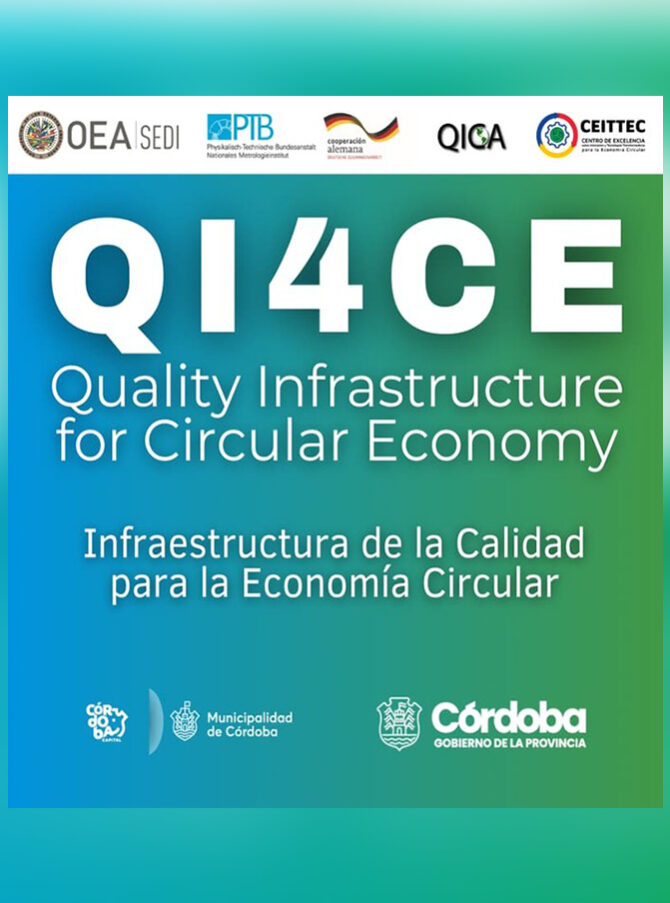
From 7 to 9 April 2026, a meeting on Quality Infrastructure for the Circular Economy was held in Córdoba, Argentina. This was organized by the Centre of Excellence on Innovation and Transformative Technologies for the Circular Economy (CEITTEC), in collaboration with the Organization of American States (OAS), the Quality Infrastructure Council of the Americas (QICA) and the German National Metrology Institute (PTB), within the framework of the regional project “Strengthening the Circular Economy through Quality Infrastructure II”, which is funded by the German Federal Ministry for Economic Cooperation and Development (BMZ).
The meeting was also attended by representatives from the municipality of Córdoba, the Government of the Province of Córdoba and the Secretariat for Innovation at the National University of Córdoba. Various companies with success stories took part too. They shared their experiences and challenges in incorporating circular transformation processes into their production systems.
“If I take a blood pregnancy test, I don’t expect the result to be that I’m partially pregnant.” Using everyday examples such as this, Sonia Carolina Sarmiento, Head of the Science, Technology, Health and Sustainability Programmes at the Colombian Institute of Technical Standards and Certification (ICONTEC), opened the first session of presentations. Here she explained the importance of the network that underpins each branch (Metrology, Standardization, Accreditation and Conformity Assessment) which ensures that it is of high quality, safe and reliable; a network that we collectively refer to as the Quality Infrastructure. She highlighted that, in the field of the Circular Economy, where there are currently various initiatives such as legislation on the prohibition, reduction and gradual replacement of single-use plastics in Colombia, which seeks to encourage the use of reusable plastic products or those made from 100% recycled material, the Quality Infrastructure could provide a solution to the need to verify the type of plastics being marketed. It could furthermore establish the characterization of batches of recycled plastics.
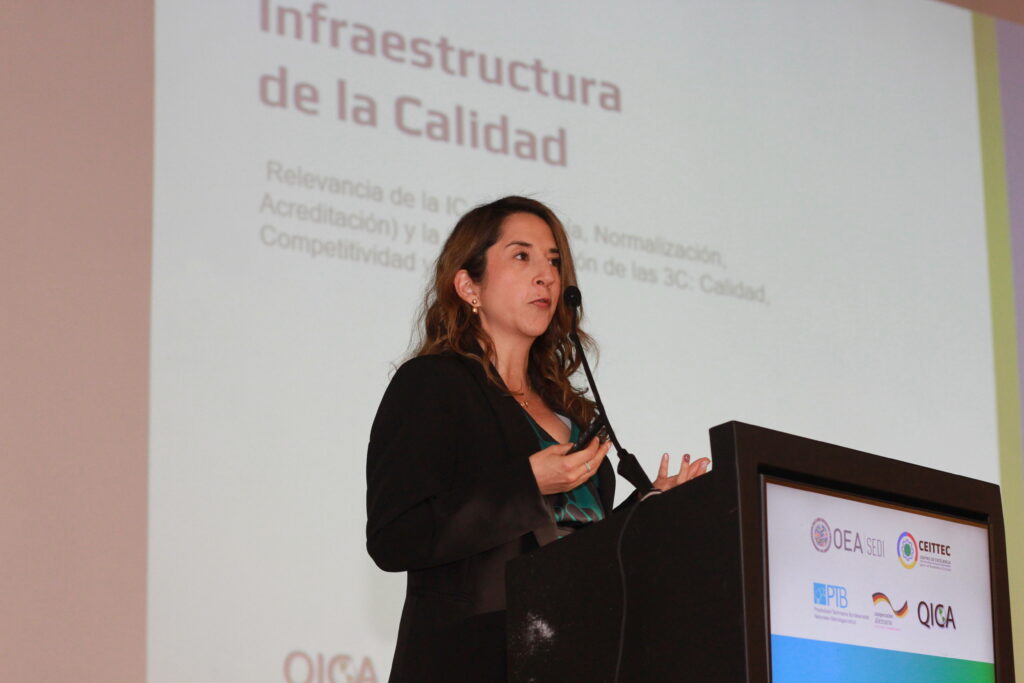
Against this backdrop, Javier Arias of the Inter-American Metrology System (SIM) highlighted the importance of Quality Infrastructure in achieving the Sustainable Development Goals (SDGs). In addition, he presented the MESURA methodology, which, adapted to the Circular Economy system, would enable the identification of improvements in the production of goods through reliable measurements, optimizing, for example, the use of resources such as materials, energy or water.
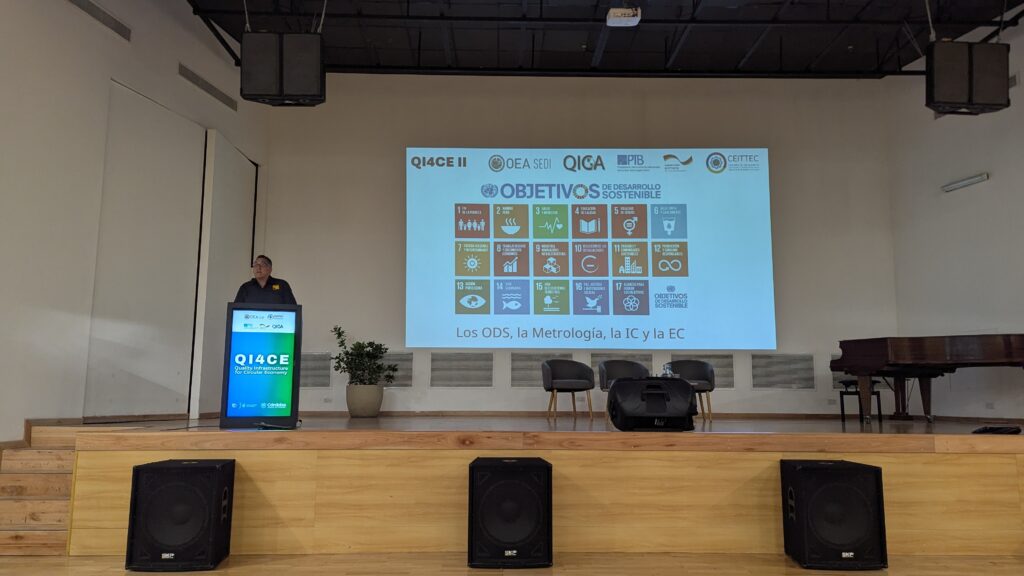
For its part, the Organization of American States (OAS) addressed the science-based approach to the Circular Economy, highlighting the existing challenges regarding the need to consolidate product life-cycle analysis data in Latin America. This in turn presents itself as an area of action in which Quality Infrastructure could develop and offer measurement and materials analysis services.
Without a doubt, one of the highlights of this event was learning about the various initiatives and innovation projects being undertaken by the City of Córdoba. These include the cooperatives, the Circular Economy Cluster in Córdoba, and the first Municipal School of Circular Economy, which is based on a model of sustainable and inclusive economic development and features an Ecodesign Department operating on the premise that waste is nothing more than a design flaw.
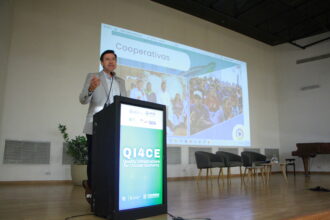
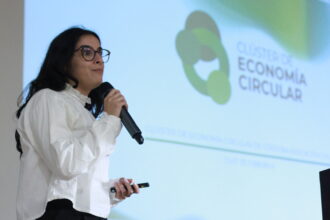
Jorge Folloni, Secretary for Environmental Management and Sustainability at the Municipality of Córdoba, and Milagros Cabrera © CEITTEC
Similarly, Raquel Ariza, a Circular Economy specialist at CEITTEC, raised the current challenge of rethinking product design to include the post-consumer phase. That means ensuring that product repair is a step considered from the product design stage so that at least parts of the products in the post-consumer phase can re-enter the reuse cycle. Waste generation and environmental impact will thereby be minimized whilst maintaining the value chain.
In this process, as explained by Alfredo Galiano, an advisor on innovation and transformative technologies at CEITTEC, Industry 4.0 tools can be an asset for enhancing the ability to generate value and optimize processes. One example of this is OPTIMACQUA, a tool created by a group of professionals from the National University of Córdoba, which uses artificial intelligence to integrate real-time information from weather stations, satellite imagery, and data on soil and crop characteristics. Thanks to data collection and analysis, this tool accurately determines the amount of water required and the exact moment it should be used, optimizing its use in crop irrigation in the province and municipality of Córdoba, reducing waste and increasing profitability.
Moving from theory to practice, a visit was made to the Grido-Helacor ice cream factory, a global pioneer in the use of refillable ice cream tubs, which can be washed and refilled, thereby reducing the use of single-use plastics and environmental pollution. Another highlight was the social ice-cream parlours, which aim to provide employment opportunities for entrepreneurs in vulnerable areas at prices accessible to consumers, whilst maintaining the high quality of the products.
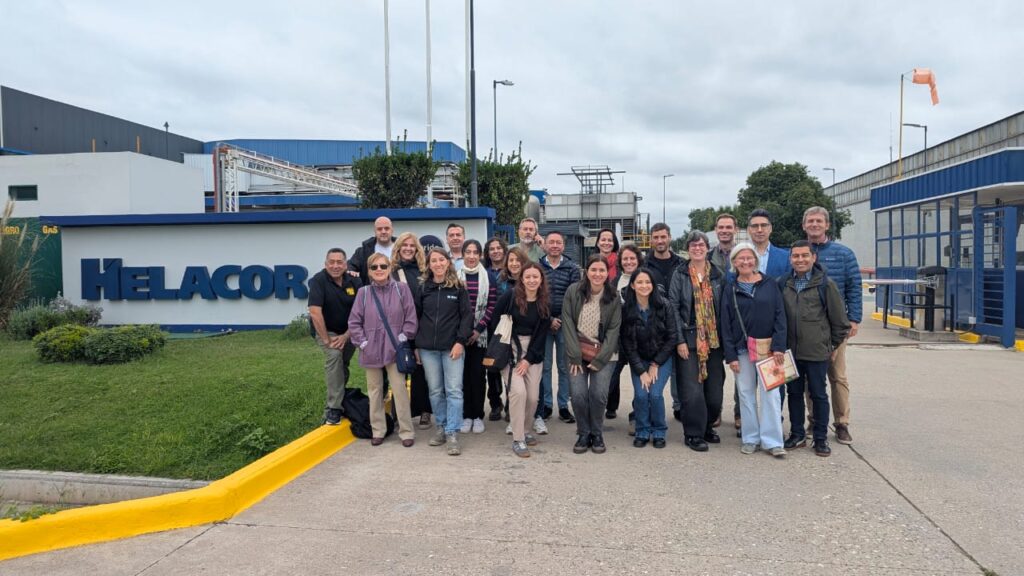
The delegation also visited the Córdoba Sustainable Industrial Park, which stands out for its design based on the Circular Economy and its commitment not only to industrial matters but also to environmental and social issues. This park features photovoltaic power generation plants and water reuse systems, and its construction utilizes materials with a lower environmental impact, such as sewage pipes made from recycled plastic. Quality Infrastructure, with the support of the National Institute of Industrial Technology (INTI), is expected to make a significant contribution to the calculation of environmental footprint measurements so that these can be recognized. Similarly, INTI, which was also visited, is working on establishing laboratory testing for new products containing plastic additives and recycled materials.
The meeting concluded with a workshop comprising three sector-specific working groups: manufacturing, construction and food. During the workshop value chains were analysed, identifying where services from the Quality Infrastructure for the Circular Economy are needed, without neglecting key aspects such as traceability and digitalization.
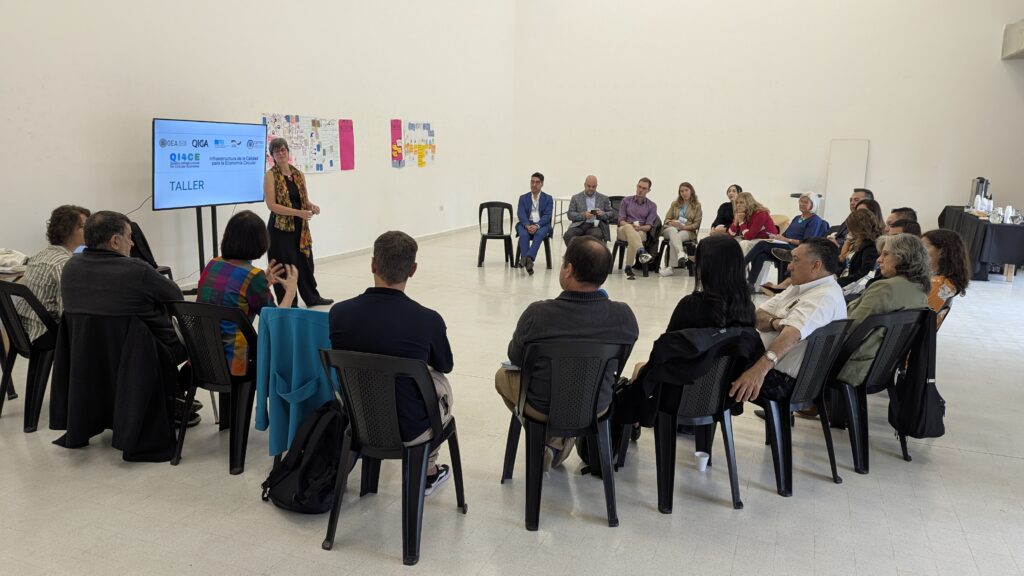
This meeting facilitated a fruitful exchange between public and private stakeholders, reaffirming the shared goal of working together towards more circular, efficient and high-quality production systems.